Imagine hiring a salesperson who shows up to every meeting late, dresses unprofessionally, cannot clearly explain what your business does, and loses their notes before the client can ask any questions.
You would not keep that salesperson for long.
Yet thousands of Nigerian businesses are doing exactly this with their website.
Your website is your most important salesperson. It works around the clock, represents your brand to every potential customer who searches for you online, and is often the single deciding factor in whether someone contacts you or closes the tab and calls your competitor instead.
The brutal truth is that most Nigerian business websites are not just failing to impress — they are actively driving customers away. And because the damage happens silently, most business owners have no idea it is happening.
This article explains why your website is losing you customers every day and the fixes.
| BEFORE YOU READ ON — QUICK SELF-AUDIT Open your business website on your mobile phone right now. Ask yourself: ✓ Did it load in under 3 seconds? ✓ Is everything readable without zooming in? ✓ Can you immediately tell what your business does and who it is for? ✓ Is there a clear next step; a button, a call, a form — visible without scrolling? ✓ Would you trust this website enough to give it your money? If you answered NO to any of these, keep reading. Every issue above is fixable. |
How Much Is a Bad Website Actually Costing You?
Nigerian internet users have become increasingly sophisticated. Years of exposure to well-designed platforms — from Flutterwave and Paystack to Jumia and international brands — have raised expectations significantly. A website that looked acceptable in 2019 can feel untrustworthy in 2026.
Consider these realities:
These are not abstract statistics. For a Nigerian business receiving 500 website visitors per month, even a modest 5% improvement in conversion rate — turning visitors into enquiries — could mean 25 additional leads every month. At a reasonable close rate, that is a significant revenue difference, month after month, compounding indefinitely.
Now let us look at exactly what is standing between your visitors and that conversion.
10 Website Mistakes Nigerian Businesses Make (And How to Fix Each One)
Mistake 1 — Your Website Loads Too Slowly
Speed is not just a user experience issue in Nigeria, it is a fundamental business problem. The majority of your website visitors are on mobile data connections, often on 3G or 4G networks with variable speeds. If your pages take longer than three seconds to load, you will lose the majority of those visitors before they even see your content.
Page speed is also a confirmed Google ranking factor. A slow website ranks lower in search results, meaning fewer people find you in the first place.
| THE MISTAKE | THE FIX |
| Images uploaded at full resolution (3–8MB each), no caching, cheap shared hosting on overseas servers, and bloated page builders creating heavy code. | Compress all images to under 200KB before uploading. Enable browser caching. Use a hosting provider with servers closer to Nigeria or on a fast African CDN. Consider a lightweight theme. Test monthly with Google PageSpeed Insights (free). |
Mistake 2 — It Is Not Built for Mobile Phones
Over 85% of Nigerian internet users access the web via mobile phones. Yet a large proportion of Nigerian business websites are still built with desktop as the primary consideration — and on mobile, they are a mess. Tiny text, buttons too small to tap, horizontal scrolling, images that overflow the screen.
Google uses mobile-first indexing, meaning it primarily judges your website based on its mobile version. A poor mobile experience hurts both your user conversions and your search rankings simultaneously.
| THE MISTAKE | THE FIX |
| Website designed on a desktop computer, tested only on a desktop, with mobile responsiveness treated as an afterthought. | Test your website on at least three different Android phones, because that is what most of your Nigerian visitors are using. Use Google’s Mobile-Friendly Test tool (free). Every element- text, buttons, images, forms- must be optimised for a 360–414px screen width. |
Mistake 3 — Visitors Cannot Tell What You Do Within 5 Seconds
When someone lands on your website for the first time, you have approximately five seconds to answer three questions: What does this business do? Who is it for? Why should I care? If your homepage hero section — the first thing visible before scrolling — does not answer all three clearly and immediately, most visitors will leave.
This is one of the most common problems on Nigerian business websites. The homepage shows a beautiful photo, a vague tagline like “Providing excellence in all we do,” and no clear indication of what the business actually offers.
| THE MISTAKE | THE FIX |
| Vague hero section with generic tagline, stock photography, and no clear indication of what the business does or who it serves. | Rewrite your hero headline to clearly state what you do and who you do it for. Example: “Professional Website Design for Nigerian Businesses — Built to Convert Visitors into Customers.” Add a specific sub-headline. Include one clear CTA button. Test with someone who has never seen your business before — ask them to tell you what you do within 5 seconds of seeing your homepage. |
Mistake 4 — There Is No Clear Call to Action
A website without a clear call to action is like a shop with no till — people browse but have no clear way to buy. Yet many Nigerian business websites make their visitors work to figure out how to get in touch, get a quote, or take the next step.
The call to action (CTA) is the specific action you want visitors to take. It should be unmissable, repeated throughout the page, and worded to communicate value rather than effort.
| THE MISTAKE | THE FIX |
| Contact information buried in the footer. No CTA buttons on service pages. “Contact Us” as the only action available, hidden behind multiple clicks. | Place your primary CTA button in the header navigation so it is visible on every page. Repeat it after every major section of your homepage. Use action-oriented, specific wording: “Get a Free Quote,” “Book a Free Consultation,” “WhatsApp Us Now” — not generic “Learn More” or “Click Here.” On mobile, consider a sticky CTA button that stays visible as visitors scroll. |
Mistake 5 — Your Website Has No Trust Signals
Nigerian consumers are cautious — and with good reason. Online scams, fake businesses, and poor service experiences have made trust a primary purchase consideration. A website that does not actively demonstrate trustworthiness will lose potential customers to competitors who do, even if your actual service is superior.
Trust signals are the specific elements that tell a visitor: this is a real, credible, reliable business.
| THE MISTAKE | THE FIX |
| No client testimonials. No team photos — just a stock photo of hands shaking. No case studies. No business registration details. No physical address or verifiable contact information. | Add real client testimonials with full names, photos, and their business name where possible. Include genuine team photos. Showcase past projects with real results. Display your CAC registration number if registered. Add a physical address, phone number visible in the header, and an active WhatsApp button. Show any industry affiliations, certifications, or media mentions. |
Mistake 6 — The Website Content Is About You, Not Your Customer
Walk through most Nigerian business websites and you will find page after page of content about the company — its history, its mission, its values, how many years it has been in operation. What you will not find is content that directly addresses what the customer is trying to achieve, the problem they are trying to solve, or why choosing this business is the obvious decision for them.
Your visitors do not come to your website to learn about you. They come to understand whether you can solve their problem. The most effective business websites are customer-centric — they speak entirely in terms of customer outcomes.
| THE MISTAKE | THE FIX |
| Homepage reads: ‘We are a leading company with 10 years of experience providing top-quality solutions across diverse sectors…’ — no mention of who you help or what you specifically do for them. | Rewrite all website copy with the customer as the subject. Replace ‘We provide…’ with ‘You get…’ Replace ‘Our company was founded…’ with ‘Businesses like yours come to us when…’ Every page should answer: What problem does this solve? What does life look like after hiring us? Why us specifically? |
Mistake 7 — Your Website Is Not Optimised for Search Engines (SEO)
A website that nobody can find is a website that generates no leads. Yet SEO — the process of making your website visible on Google — is one of the most frequently overlooked aspects of Nigerian business websites.
Most Nigerian business websites have no keyword strategy, missing or duplicate page titles, no meta descriptions, uncompressed images with no alt text, and no structured content hierarchy. The result is a website that Google cannot properly understand or rank.
| THE MISTAKE | THE FIX |
| Every page has the same generic title (‘Home | Company Name’). No meta descriptions. No heading structure. Images named ‘image001.jpg’ with no alt text. No location-specific content despite serving a specific Nigerian market. | Give every page a unique, keyword-rich title (under 60 characters). Write a unique meta description for each page (under 155 characters). Structure content with proper H1, H2, H3 headings. Add descriptive alt text to every image. Create location-specific pages or content if you serve multiple Nigerian cities. Submit your sitemap to Google Search Console. |
Mistake 8 — Broken Links, Errors, and Outdated Information
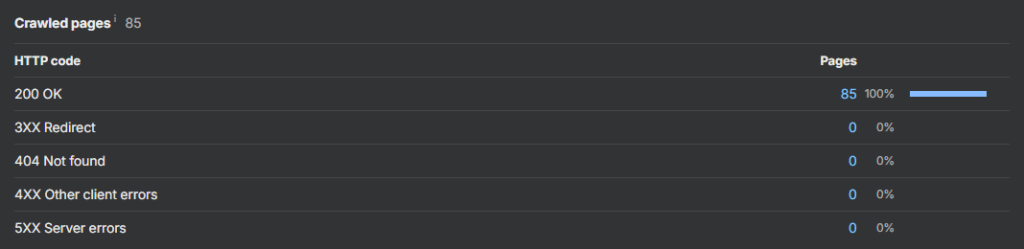
Few things undermine a visitor’s trust faster than a broken page, a ‘404 error,’ a dead phone number, a copyright footer still showing 2021, or a ‘Latest News’ section with the most recent post from three years ago. These details signal neglect, and if a business neglects its own website, what does that say about how it will treat customers?
| THE MISTAKE | THE FIX |
| Dead links throughout the site. Contact form that does not send emails. Phone number that rings out or is out of service. Services page describing offerings that are no longer available. | Conduct a full website audit every quarter. Use Google Search Console’s Coverage report to find 404 errors. Test every form submission to confirm emails are received. Check every phone number and WhatsApp link. Update your copyright year. Review all service descriptions for accuracy. Archive or update any outdated blog or news content. |
Mistake 9 — No Analytics; You Are Flying Blind
If you do not know how many people visit your website, where they come from, which pages they visit, or where they leave, you cannot improve your results. Yet a large proportion of Nigerian business websites have never had Google Analytics installed, meaning every decision about the website is based on guesswork.
| THE MISTAKE | THE FIX |
| No Google Analytics. No Search Console. No heatmap or user recording tools. Business owner has no idea how many people visit the website or what they do when they arrive. | Install Google Analytics 4 and Google Search Console immediately — both are free and take under an hour to set up. Once you have 30 days of data, review: which pages get the most traffic, which pages have the highest bounce rate (people leaving without clicking anything), where your traffic comes from, and which devices your visitors use. These four data points alone will tell you where to focus your improvement efforts. |
Mistake 10 — No Strategy Behind the Website
The most fundamental mistake — and the one that causes all the others — is building a website without a clear strategy. Many Nigerian businesses build their website because they feel they should have one, or because a competitor has one. They pick a template they like, fill it with content about their business, and launch it. Then they wonder why it generates no leads.
A website that drives business growth is built backwards from a question: what action do we want visitors to take, and what is the most effective path to get them there? Every design decision, every content choice, every technical implementation should serve that conversion goal.
| THE MISTAKE | THE FIX |
| Website built to look good, not to convert. No defined conversion goal. No user journey mapped. No testing done after launch. | Before any design work starts, define your primary conversion goal (e.g. ‘generate enquiries via WhatsApp or contact form’). Map the visitor journey: how does someone who has never heard of you become a paying customer, and how does your website facilitate each step of that journey? Build every page to serve a specific purpose in that journey. |
Your Website Health Checklist: Audit Your Site in 30 Minutes
Use this checklist to audit your website right now. Every item marked NO is a priority fix.
| Checkpoint | YES ✓ | NO ✗ |
|---|---|---|
| My website loads in under 3 seconds on a mobile phone (test with PageSpeed Insights) [SPEED] | ||
| My website looks and functions perfectly on a small Android screen [MOBILE] | ||
| A first-time visitor can tell what my business does within 5 seconds of landing [CLARITY] | ||
| There is a visible, specific CTA button in the header on every page [CTA] | ||
| My homepage has real client testimonials with names and photos [TRUST] | ||
| My website has a visible phone number and WhatsApp link in the header [TRUST] | ||
| Every page has a unique, keyword-rich title tag under 60 characters [SEO] | ||
| Every page has a unique meta description under 155 characters [SEO] | ||
| All images have descriptive alt text [SEO] | ||
| My website copy focuses on customer outcomes, not just company history [CONTENT] | ||
| All contact forms are tested and send emails correctly [FUNCTION] | ||
| There are no broken links or 404 errors on my website [FUNCTION] | ||
| Google Analytics 4 is installed and tracking visits [ANALYTICS] | ||
| My website is connected to Google Search Console [ANALYTICS] | ||
| My website has an SSL certificate (URL begins with https://) [SECURITY] | ||
| My copyright year in the footer is current (2026) [FRESHNESS] |
How Long Does It Take to Fix a Poorly Performing Website?
That depends on the current state of your website and how many of the issues above apply. Here is a realistic timeline:
| Timeline | What can be fixed | Expected impact |
|---|---|---|
| 1–3 days | Image compression, Google Analytics setup, fixing broken links, updating contact info, SSL certificate | Immediate improvement in load speed; start collecting data |
| 1–2 weeks | Rewriting page titles and meta descriptions, adding CTAs throughout, updating hero section copy, collecting and adding testimonials | Improved click-through rates from Google; better first impressions |
| 2–4 weeks | Full mobile optimisation, content rewrite with customer-centric language, proper heading structure, adding case studies | Meaningful improvement in conversion rate and time on site |
| 4–8 weeks | Full website redesign with conversion-focused architecture, new photography, comprehensive SEO implementation, performance optimisation | Significant improvement in rankings, traffic, and lead generation |
When Is It Time to Scrap Your Website and Start Fresh?
Sometimes the most cost-effective decision is not to fix your existing website but to build a new one from the ground up. These are the signals that a redesign is the right call:
- Your website is more than 3 years old and built on outdated technology
- Your brand has evolved significantly since the website was built
- Your existing website cannot be made mobile-responsive without a full rebuild
- Your website is slow despite optimisation efforts because the underlying code or theme is fundamentally bloated
- Your business has added new services or changed direction, and the current site no longer represents what you do
- You have gone through the checklist above and more than 10 items are marked NO
A professionally built, conversion-optimised website is not a cost — it is an investment. When done correctly, a new website pays for itself many times over through the additional leads and revenue it generates.
| WHAT A PROFESSIONAL WEBSITE BUILD SHOULD INCLUDE IN 2026 ✓ Discovery process — understanding your business, customers, and conversion goals before any design work ✓ Mobile-first design — built for phones first, then scaled up to desktop ✓ Speed optimisation — target under 2.5 seconds load time on 4G ✓ SEO foundations — proper structure, metadata, schema markup, sitemap, Search Console setup ✓ Conversion architecture — strategic placement of CTAs, trust signals, and customer journey design ✓ Content strategy — page copy written for your target customer, not your company history ✓ Analytics setup — Google Analytics 4 and Search Console configured from day one ✓ Post-launch support — a development partner who remains available after go-live |
The Bottom Line: Your Website Should Be Working Harder Than It Is
Every day your website has unresolved performance issues is a day when potential customers visit, leave, and choose a competitor with a faster, clearer, more trustworthy online presence.
The good news is that every problem covered in this article is fixable. Some fixes can be made in a single afternoon. Others require a proper rebuild. But all of them will directly and measurably improve how many of your website visitors become paying customers.
If you are not sure where to start, or if you want a professional assessment of exactly what your website needs, that is precisely what our free website audit is designed to provide.
Find out exactly what your website is costing you — for free.
Book a FREE Website Audit with Eskimohtech Digital Agency. We will review your site against all 10 areas covered in this article, identify your highest-priority fixes, and give you a clear action plan at no cost and no obligation.
Frequently Asked Questions About Business Website Performance in Nigeria
How much does a professional business website cost in Nigeria?
Professional business website costs in Nigeria typically range from ₦150,000 for a simple, clean brochure site to ₦800,000 or more for a fully custom, conversion-optimised website with e-commerce, booking systems, or complex integrations. The right investment depends on your business goals and the revenue you expect the website to generate. At Eskimohtech, we provide detailed proposals after understanding your specific needs. Contact us for a no-obligation quote.
How long does it take to build a business website in Nigeria?
A professionally built business website typically takes 3–6 weeks from kickoff to launch, depending on the scope and how quickly content and feedback are provided by the client. Simple brochure websites can be completed in 2–3 weeks. E-commerce or custom web applications take 6–12 weeks. We provide a clear timeline at the start of every project.
Should I use a website builder like Wix or Squarespace, or get a custom website?
Website builders like Wix and Squarespace are suitable for very early-stage businesses with minimal budget. However, they come with significant limitations: restricted SEO control, slow performance, limited customisation, and monthly subscription costs that exceed the cost of a properly built website over time. For any Nigerian business serious about using its website to generate leads and revenue, a professionally built website on WordPress or a custom stack will consistently outperform a website builder solution.
My website was built cheaply and is not generating leads. Should I fix it or start over?
This depends on the extent of the issues. If the website has fundamental structural problems like poor code quality, non-responsive design, or severely slow performance, a rebuild is often more cost-effective than extensive repairs. If the issues are primarily content, SEO, and CTA-related, targeted improvements may be sufficient. A professional audit will tell you which path makes more sense for your specific situation.
How do I know if my website is performing well or poorly?
Install Google Analytics 4 and check your bounce rate (percentage of visitors who leave without clicking anything; a rate above 70% suggests problems), average session duration (under 30 seconds indicates people are not engaging with your content), and conversion rate (percentage of visitors who contact you or take the desired action). If you have no analytics installed, you have no data, and fixing that is your priority.