If you have ever typed your business name into Google and watched a competitor appear above you, you already understand the cost of ignoring SEO.
In Nigeria’s increasingly digital economy, Google is the first place potential customers go when they need a product or service. Whether someone in Lagos is searching for a website designer, a digital marketing agency in Abuja, or the best SEO company in Port Harcourt, the businesses that appear on page one capture the attention, the trust, and the revenue. Everyone else is invisible.
The good news is that ranking on Google in Nigeria is more achievable than most business owners think. The competition for local search terms is still relatively low compared to more mature markets like the UK or the US. That means businesses that invest in SEO now will own those positions for years to come.
This guide breaks down exactly how to rank on Google in Nigeria in 2026, step by step, in plain language, with no unnecessary jargon.
| WHAT YOU WILL LEARN IN THIS GUIDE 1. What SEO actually means (and what it doesn’t) 2. How Google decides which websites to rank 3. Keyword research specifically for the Nigerian market 4. On-page SEO: the exact changes to make on your website 5. Technical SEO: the backend fixes that unlock your ranking potential 6. Local SEO: how to dominate searches in your city or region 7. Off-page SEO: how to build authority and trust with Google 8. How to track your results and know if your SEO is working |
What Is SEO and Why Does It Matter for Nigerian Businesses?
SEO stands for Search Engine Optimisation. In practical terms, it is the process of making your website more visible on Google and other search engines, without paying for ads.
When someone searches for “web design company Lagos” or “digital marketing agency Nigeria,” Google reviews hundreds of thousands of web pages and decides which ones to show first. SEO is the discipline of ensuring your website is one of the ones Google chooses.
Why does this matter more in Nigeria right now than ever before?
- Nigeria now has over 110 million internet users, the vast majority accessing the web through mobile phones
- Google searches for local services in Nigeria have grown by over 65% in the last three years
- Consumers who find a business through organic search are significantly more likely to trust and convert than those who see a paid ad
- Unlike paid advertising, strong SEO continues to deliver traffic and leads months and years after the initial work is done
The businesses ranking on page one of Google for their key services in Nigeria right now are not there by accident. They made deliberate SEO investments. And the gap between them and everyone else grows every month.
How Google Decides Who Ranks: The Three Pillars
Google uses over 200 ranking factors, but they all fall under three core pillars. Understanding these is the foundation of everything else in this guide.
Pillar 1 — Relevance
Google needs to understand what your website is about and confirm that it matches what a user is searching for. This is determined by the words on your page, your headings, your page titles, your meta descriptions, and the structure of your content. If your website does not clearly and consistently communicate what you do and where you do it, Google cannot rank you for the right searches.
Pillar 2 — Authority
Google measures authority largely through links. When reputable websites link to your website, Google interprets this as a vote of confidence, a signal that your content is trustworthy and valuable. A website with many high-quality links from credible sources will consistently outrank a website with little or no links, even if the content is similar. This is why link building is a core part of any long-term SEO strategy.
Pillar 3 — Experience
Since 2021, Google has placed increasing weight on what it calls Core Web Vitals, a set of measurements that assess how good the experience of using your website actually is. This includes how fast your pages load, how stable your layout is as it loads, and how quickly your site responds to user interactions. A slow, clunky website will not rank well regardless of how good your content is.
Step 1: Keyword Research for the Nigerian Market
Keyword research is the process of identifying the exact words and phrases your potential customers type into Google when looking for what you offer. It is the foundation of all effective SEO, because if you optimise for the wrong keywords, you attract the wrong visitors, or no visitors at all.
How to Find the Right Keywords
Start with what you know. Write down every service you offer and every problem you solve. Then think about how a customer in Nigeria would search for that, not how you would describe it professionally, but how they would type it into their phone.
For example:
| How you might describe it | How Nigerians actually search |
| Website development services Digital marketing consultancy Search engine optimisation Social media management | website designer in Lagos marketing company Nigeria how to rank on Google Nigeria social media manager for my business |
Use free tools like Google Keyword Planner, Ubersuggest, or Google Search Console to validate which keywords have real search volume in Nigeria. Filter by location when the tool allows it, a keyword that gets 10,000 monthly searches in the UK might get 500 in Nigeria, but those 500 searches may be far more relevant to your business.
Prioritise Long-Tail Keywords
Long-tail keywords are longer, more specific search phrases. They typically have lower search volumes but much higher conversion rates, because the person searching knows exactly what they want.
- “website design” — very competitive, broad intent, hard to rank for
- “affordable website design company in Lagos” — lower competition, high purchase intent, much easier to rank for
For most Nigerian businesses, especially those starting their SEO journey, long-tail keywords are where you should invest your initial effort. Build authority on these, then work up to the more competitive head terms.
Step 2: On-Page SEO — Optimise What’s Already on Your Website
On-page SEO refers to all the changes you make directly on your website pages to help Google understand and rank them. This is the area where most Nigerian business websites have the most immediate room for improvement.
Page Titles (Title Tags)
Your page title is the blue clickable text that appears in Google search results. It is one of the most important on-page SEO elements. Every page on your website should have a unique title that includes your primary keyword and, where relevant, your location.
EXAMPLE
Weak title: Home | EskimohTech
Optimised title: Professional Website Design Company in Lagos, Nigeria | Eskimoh Tech
Meta Descriptions
Your meta description is the short paragraph of text that appears beneath your title in search results. While it does not directly affect your ranking, a well-written meta description significantly increases click-through rate, the percentage of people who click your result when they see it.
Keep it under 155 characters. Include your keyword naturally. End with a clear action or benefit.
Headings (H1, H2, H3)
Every page should have exactly one H1 heading, the main title of the page. This should include your primary keyword. Subheadings (H2, H3) break up your content and give Google additional context about what the page covers. Use them to target secondary keywords naturally.
Content Quality and Length
Google favours comprehensive, well-written content that genuinely answers the reader’s question. For competitive keywords in Nigeria, aim for a minimum of 1,000 words per page. Include your keyword in the first 100 words of the page, and use it naturally throughout the content, but never force it in unnaturally.
Google’s systems are sophisticated enough to detect content written purely for search engines rather than for humans. Write for your reader first. Optimise for Google second.
Image Optimisation
Every image on your website should have a descriptive alt text attribute, a short text description that tells Google what the image shows. Use keywords naturally in your alt text where they genuinely describe the image. Also compress your images before uploading: uncompressed images are one of the biggest causes of slow-loading Nigerian business websites.
Step 3: Technical SEO — Fix the Foundation
Technical SEO addresses the backend structure of your website, the things users do not see but Google pays close attention to. These are often the issues that silently prevent good content from ranking.
Website Speed
Page speed is a confirmed Google ranking factor, and it is especially critical in Nigeria where many users are on mobile data connections. Run your website through Google PageSpeed Insights (free) and address any issues flagged as high priority. Common quick wins include:
- Compressing and resizing images before uploading
- Enabling browser caching on your hosting server
- Minifying CSS and JavaScript files
- Using a fast, reputable hosting provider (avoid shared hosting on servers located outside Africa)
Mobile-Friendliness
Over 85% of Nigerian internet users access the web via mobile phones. Google uses mobile-first indexing, meaning it primarily uses the mobile version of your website for ranking decisions. Your website must be fully functional, readable, and fast on a smartphone screen. Test it using Google’s Mobile-Friendly Test tool.
HTTPS Security
If your website URL begins with http:// rather than https://, you have an SSL certificate issue. Google actively flags non-HTTPS sites as “Not Secure” and deprioritises them in rankings. Every Nigerian business website in 2026 must have a valid SSL certificate installed, most hosting providers offer these free or at very low cost.
Crawlability and Indexing
Google needs to be able to find and read your web pages. Submit your website to Google Search Console (free) and submit your sitemap. Check for any crawl errors or pages that have accidentally been blocked from indexing. A page Google cannot crawl is a page that will never rank.
Step 4: Local SEO — Dominate Searches in Your City
Local SEO is the most powerful and fastest-returning SEO strategy for most Nigerian businesses. It targets searches with local intent, people specifically looking for businesses in a particular city or region.
Google Business Profile
If you have not yet claimed and fully optimised your Google Business Profile, this is the single highest-priority SEO action you can take today. It is free, it is relatively quick to set up, and it is what determines whether your business appears in the local map pack, the prominent set of three business listings that appears at the top of Google for most local searches.
To fully optimise your Google Business Profile:
- Claim your profile at business.google.com
- Verify your business with a physical address
- Complete every section: business name, category, services, hours, website, phone number
- Add high-quality photos of your team, office, and work
- Collect and respond to customer reviews, the quantity and quality of reviews is a significant local ranking factor
- Post regular updates directly on your Google Business Profile
NAP Consistency
NAP stands for Name, Address, Phone number. Your business NAP must be identical across every online platform where it appears, your website, your Google Business Profile, your social media pages, business directories, and anywhere else. Inconsistencies confuse Google and harm your local rankings.
Local Citations
A local citation is any online mention of your business name, address, and phone number. Getting listed on reputable Nigerian and African business directories, such as VConnect, Nairaland, Businesslist Nigeria, and sector-specific directories, builds local authority and strengthens your local SEO signals.
Step 5: Off-Page SEO — Build Your Authority
Off-page SEO refers to actions taken outside your own website that influence your Google rankings. The primary currency of off-page SEO is backlinks, links from other websites pointing to yours.
How to Build Quality Backlinks in Nigeria
- Guest posting: Write expert articles for reputable Nigerian blogs, news sites, and industry publications. Include a natural link back to your website in the author bio or content.
- PR and media coverage: Get your business featured in Nigerian tech media outlets such as Techpoint Africa, Nairametrics, or BusinessDay. A single link from a high-authority Nigerian media site can significantly boost your domain authority.
- Partnerships and collaborations: Partner with complementary businesses and link to each other’s relevant content.
- Resource pages: Create genuinely useful free resources, guides, templates, tools that other websites in your industry will naturally want to link to.
- Testimonials: Provide testimonials to tools and services your business uses. Many companies publish customer testimonials on their websites with a link to the customer’s site.
| IMPORTANT NOTE Avoid purchasing cheap backlinks from link farms or directories offering “1,000 backlinks for $10.” These low-quality links can trigger Google penalties and actively harm your rankings. One high-quality link from a reputable Nigerian media outlet or industry site is worth more than 500 low-quality links combined. |
Step 6: Track Your Results — Know What’s Working
SEO without measurement is guesswork. These are the free tools every Nigerian business should be using to monitor their SEO performance:
Google Search Console (Free)
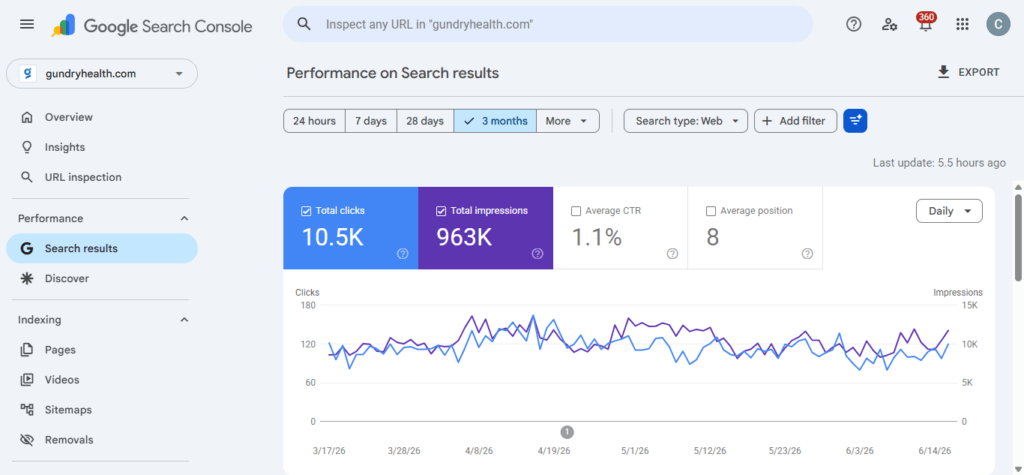
Google Search Console shows you exactly which keywords your website is ranking for, how many people are seeing your pages in search results, and how many are clicking through to your site. It also alerts you to technical issues, manual penalties, and crawl errors. Set it up the day you start your SEO work and check it weekly.
Google Analytics 4 (Free)
Google Analytics tracks what happens once visitors arrive on your website, which pages they visit, how long they stay, where they came from, and whether they take the actions you want them to take (filling in a contact form, booking a consultation, calling your number). Connect it with Search Console for a complete picture of your organic search performance.
What to Track and When
| Metric | Check Frequency |
| Keyword rankings Organic impressions Organic click-through rate Organic traffic volume Leads from organic search Core Web Vitals scores | Weekly Weekly Weekly Monthly Monthly Monthly |
One critical mindset point: SEO is a long-term investment. Do not expect overnight results. For most competitive keywords in Nigeria, you should expect to see meaningful movement in rankings within three to six months of consistent, quality SEO work. The businesses that commit to this timeline are the ones that build durable, compounding organic traffic — while their competitors continue to spend on paid ads month after month.
Common SEO Mistakes Nigerian Businesses Make (And How to Avoid Them)
- Optimising for keywords nobody searches for. Always validate keyword volume with tools before building content around a term.
- Keyword stuffing. Repeating your keyword unnaturally throughout the page does not help, it hurts. Google penalises this. Write naturally.
- Neglecting mobile experience. With most Nigerian users on mobile, a non-responsive website is an SEO dead end.
- Ignoring Google Business Profile. The local map pack is some of the highest-intent traffic available. Claiming and optimising your profile is non-negotiable.
- Building low-quality backlinks. Cheap link schemes cause Google penalties that can take months or years to recover from.
- Giving up too soon. SEO takes time. Businesses that abandon their strategy after six weeks miss the results that typically come in months three through twelve.
- Treating SEO as a one-time task. Google’s algorithm updates regularly. Your competitors are continually improving their SEO. It requires consistent, ongoing attention.
The Bottom Line: SEO Is the Most Powerful Long-Term Marketing Investment You Can Make
Paid advertising stops the moment you stop paying. SEO compounds. A page that ranks well today can continue to bring in leads and revenue for years — without any additional spend.
For Nigerian businesses operating in 2026, the question is not whether to invest in SEO. The question is how soon you start — and whether you build the right foundation from the beginning.
The businesses on page one of Google for your key services in Nigeria right now did not get there by accident. They worked with people who understood both the SEO landscape and the specific nuances of the Nigerian digital market.
Want to know exactly why your website isn’t ranking on Google?
Get a FREE SEO Audit from Eskimoh Tech. We’ll analyse your website, identify the exact issues holding you back, and give you a clear, prioritised action plan, at no cost, no obligation. We work with businesses across Nigeria and beyond.
➡ Book your free SEO audit at eskimohtech.com
Frequently Asked Questions About SEO in Nigeria
1. How long does SEO take to show results in Nigeria?
Most businesses begin to see meaningful movement in keyword rankings within three to six months of consistent SEO work. Highly competitive keywords may take longer. Local and long-tail keywords often rank faster, sometimes within four to eight weeks.
2. How much does SEO cost in Nigeria?
SEO costs vary widely depending on the scope of work and the competitiveness of your target keywords. At Eskimoh Tech, we offer tailored SEO packages for Nigerian businesses. Contact us through eskimohtech.com for a personalised quote.
3. Can I do SEO myself without hiring an agency?
Some elements of SEO, such as claiming your Google Business Profile, optimising your page titles, and creating quality content, can be done without an agency. However, technical SEO, link building, and competitive keyword strategy typically require professional expertise to be done effectively. Many businesses start with DIY basics and bring in an agency when they are ready to scale results.
4. What’s the difference between SEO and paid Google ads?
Paid Google ads (Google Ads / PPC) place your website at the top of search results immediately, but only for as long as you continue paying. SEO builds your organic ranking over time and continues to deliver traffic without ongoing ad spend. Most successful Nigerian businesses use both, paid ads for immediate results, SEO for long-term growth.
5. Is SEO worth it for small businesses in Nigeria?
Absolutely, and often more so than for large businesses. Small businesses benefit most from local SEO, where competition is lower and the ability to dominate a geographic area quickly is very real. A well-optimised small business website in Lagos can outrank a larger competitor that has neglected its SEO.