Nigeria’s business landscape is evolving at breakneck speed. With over 200 million people, an exploding middle class, and one of the world’s youngest entrepreneurial populations, the country’s commercial ecosystem has never been more competitive or more exciting.
Yet, walk into the average Nigerian business today, whether a growing SME in Lagos Island, a logistics company in Abuja, or a retail chain in Port Harcourt, and you’re likely to find the same story: legacy processes, manual workflows, and technology that’s years behind where it needs to be.
The results are wasted money, frustrated employees, and missed revenue.
The good news is that the solutions exist and are neither complicated nor always expensive. And in 2026, they’re no longer optional if you want to compete and scale.
In this article, we break down the 10 Tech solutions every Nigerian business needs in 2026. Every forward-thinking Nigerian business is deploying these right now and why ignoring them is quietly costing you.
1. A Fast, Mobile-First Website That Actually Converts
In 2026, your website is your most important salesperson. It works 24 hours a day, seven days a week, and unlike a human sales rep, it can handle thousands of conversations simultaneously.
But here’s the problem: most Nigerian business websites fail at the most basic job, converting visitors into customers. They load slowly on mobile data networks (where the vast majority of your users are), have no clear call-to-action, and bury your contact details three clicks deep.
What you need instead:
- Pages that load in under 3 seconds on 3G/4G networks
- A mobile-first design (not just mobile-responsive)
- Clear, repeated CTAs — “Get a Quote”, “Book a Call”, “WhatsApp Us”
- Trust signals: testimonials, certifications, real team photos
The businesses winning online in Nigeria right now are not the ones with the prettiest websites. They’re the ones with the fastest, clearest, most conversion-focused websites.
2. Cloud-Based Business Management Software (ERP/CRM)
Spreadsheets were never meant to run a business. Yet, in 2026, thousands of Nigerian companies are still managing inventory, finances, customer data, and HR in Excel files scattered across dozens of laptops.
Cloud ERP (Enterprise Resource Planning) and CRM (Customer Relationship Management) software changes everything. You get:
- Real-time visibility into your inventory, cash flow, and sales pipeline
- Automated invoicing and payment tracking
- A single source of truth that your entire team can access from anywhere
- Instant financial reporting instead of waiting until month-end
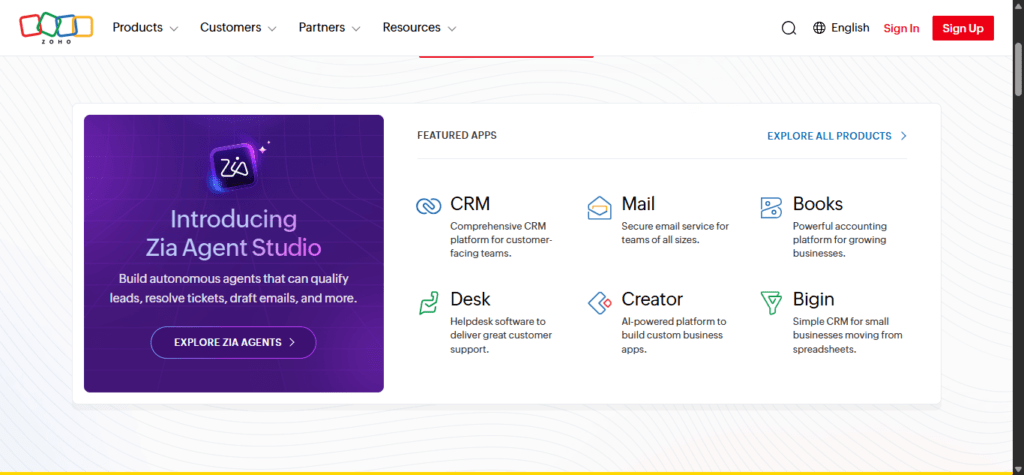
Tools like Odoo, Zoho, or a custom-built solution tailored to your operations can typically pay for themselves within six months through reduced errors, faster billing cycles, and better decision-making.
3. Cybersecurity Fundamentals (You’re More Vulnerable Than You Think)
Nigerian businesses lose billions of naira every year to cybercrime. Phishing attacks, ransomware, and business email compromise are not problems for multinational corporations only. SMEs are now the primary targets precisely because attackers know most small and medium businesses have almost no defences.
The bare minimum every Nigerian business needs in 2026:
- Multi-factor authentication (MFA) on all business accounts
- Business-grade antivirus and endpoint protection on every device
- An automatic, off-site data backup solution running daily
- Staff cybersecurity awareness training (human error causes over 80% of breaches)
- A clear incident response plan — what do you do when (not if) something goes wrong?
This is not fear-mongering. It’s business continuity planning. One successful ransomware attack can shut down your operations for weeks and cost more to recover from than a year’s worth of proper security spending.
4. WhatsApp Business API Integration
WhatsApp is Nigeria’s operating system. With over 50 million active users in the country, your customers are already there; they just want you to show up properly.
The WhatsApp Business API goes far beyond having a business profile. When properly integrated:
- Automated order confirmations and delivery updates are sent instantly
- Customer inquiries are handled by chatbots 24/7, with human handoff when needed
- Appointment reminders reduce no-shows by up to 60%
- Promotional broadcasts reach customers directly with high open rates
For retail, logistics, healthcare, and financial services businesses in Nigeria, a well-configured WhatsApp API integration is often the single highest-ROI technology investment available.
5. Digital Payment Infrastructure
Nigeria went through a seismic shift in payment behaviour during and after the naira redesign crisis of 2023. Customers now expect to pay digitally via transfer, card, USSD, or QR code at every touchpoint.
If your business still depends primarily on cash or only one payment method, you are actively losing sales every day. The solution is a unified payment infrastructure that includes:
- Online payment gateway on your website (Paystack, Flutterwave, or Interswitch)
- POS terminals at physical locations
- USSD payment option for customers without smartphones
- Payment links for WhatsApp and social media sales
- Automated reconciliation to eliminate manual counting errors
6. Business Process Automation
Think about how many hours your team spends on repetitive tasks: copying data from one system to another, manually sending follow-up emails, generating the same report every Monday morning, and approving routine invoices.
Business process automation (BPA) eliminates these tasks or reduces them to a single click. In practical terms, this means:
- Automated email sequences for new leads and customers
- Auto-generated invoices triggered by completed sales
- Workflow automation for internal approvals (leave requests, purchase orders, expense claims)
- Automatic reporting is sent to management every week
The average Nigerian business that automates its core workflows saves 15–20 hours of staff time per week. That time goes back into revenue-generating activities.
7. Data Analytics and Business Intelligence
You cannot manage what you cannot measure. Most Nigerian businesses make major decisions about hiring, marketing spend, new product lines, and location expansion based on gut feeling rather than data.
Business intelligence (BI) tools turn your existing data into actionable insights. Even at a basic level, you should know:
- Which products or services have the highest and lowest margins
- Which marketing channels are driving actual revenue (not just clicks)
- What your best customers have in common (and how to find more of them)
- Where your biggest operational bottlenecks are
Tools like Google Data Studio (now Looker Studio), Power BI, or custom dashboards built for your specific business can provide these insights in real time, every day.
8. Cloud Infrastructure and Remote Work Capabilities
The days of your entire business living on one office server are over. Power outages, flooding, theft, and equipment failure, in the Nigerian context, a single-point physical infrastructure is a massive business risk.
Cloud infrastructure means your business keeps running regardless of what’s happening physically. Your team can work from anywhere with internet access, your data is backed up across multiple locations, and you only pay for the computing resources you actually use.
For growing Nigerian businesses, this typically means:
- Microsoft 365 or Google Workspace for email, documents, and collaboration
- Cloud-hosted business applications accessible from any device
- Virtual private network (VPN) for secure remote access
- Cloud backup for all critical business data
9. A Custom Mobile App (When the Time Is Right)
Not every business needs a mobile app today, and building one too early is one of the most common tech mistakes we see Nigerian entrepreneurs make. But when your customer engagement model genuinely benefits from a dedicated app, it becomes a powerful loyalty and revenue tool.
The right time for a custom mobile app is when:
- You have a large, returning customer base who would benefit from self-service features
- Your service involves frequent orders, bookings, or account management
- You want to build a loyalty programme with push notification capabilities
- Your competitors already have apps, and you’re losing customers because of it
When built correctly with a clear user journey, fast performance on Nigerian network conditions, and deep integration with your backend systems, a custom app can increase customer retention by 30–40%.
10. A Proactive IT Partner (Not Just a Repairman)
This is the one most Nigerian business owners overlook, and it might be the most important of all.
Most businesses treat IT support reactively: something breaks, they call someone to fix it. This approach is expensive, disruptive, and leaves your business perpetually behind.
What you actually need is a proactive technology partner, a team that:
- Understands your business goals, not just your technical infrastructure
- Monitors your systems and catches problems before they become crises
- Advises you on what technology investments will drive the best returns for your specific business
- Scales with you as your needs evolve
The difference between a reactive IT vendor and a proactive tech partner is the difference between a business that’s always fighting fires and one that’s consistently moving forward.
Ready to transform your business with the right technology?
Get a FREE audit from Eskimoh Tech. We’ll review your current website and digital pressence, identify your biggest gaps, and give you a clear roadmap, at no cost and no obligation.